


Hydrogen Generators for CVD Diamond Manufacturing: Why On-Site PEM Electrolysis Is Replacing Cylinder Supply
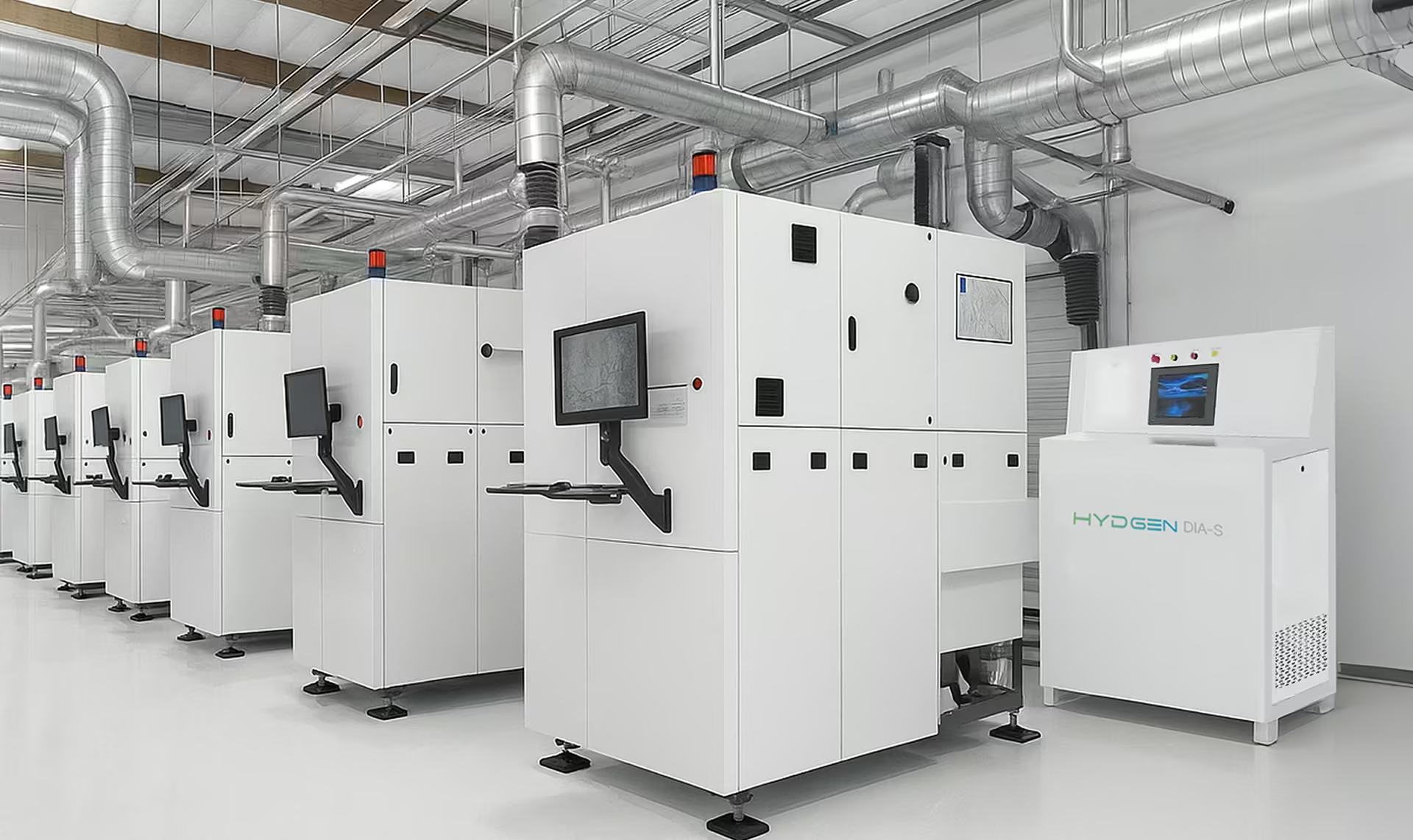
CVD diamond manufacturing requires continuous, ultra-high purity hydrogen at flow rates that conventional supply chains cannot reliably sustain. On-site PEM electrolysis solves this structurally, and the economics are already compelling at production scale.
Ask any production manager at a CVD diamond facility what keeps them up at night and you will rarely hear 'diamond quality.' The growth process is well-understood. The reactors are engineered. The talent is in place. What you will hear about is gas supply.
Chemical vapor deposition diamond synthesis depends on a continuous, uninterrupted supply of hydrogen at extremely high purity. Not approximately continuous - continuously. Not approximately high purity - at purity grades that most industrial gas supply chains cannot consistently guarantee. When that supply is interrupted, or when purity falls below specification, the cost is not proportional to the interruption duration. It is a step function: reactors down, plasma destabilised, restart costs measured in weeks and hundreds of thousands of dollars.
The industry has known this for years. What has changed is that on-site PEM electrolysis is now a mature, deployable answer to the problem - and an economically competitive one.
What purity does CVD diamond manufacturing actually require?
Hydrogen purity is measured in 'nines' - 99.9% is three nines (3N), 99.999% is five nines (5N), and so on. CVD diamond synthesis requires a minimum of 99.9995% purity (five-and-a-half nines) for most production applications, with leading facilities specifying 99.99999% - seven nines, or 7N.
The reason is chemistry. In a microwave plasma CVD reactor, hydrogen is not a carrier gas in the passive sense. It actively etches non-diamond carbon (graphite) from the growing crystal surface, maintaining the plasma environment that allows diamond to form. Trace impurities - oxygen, moisture, hydrocarbons - interfere with this process directly. At the concentrations relevant to CVD diamond, even parts-per-billion contamination affects crystal quality, defect density, and optical clarity.
For industrial-scale CVD diamond production - facilities running dozens of reactors continuously - this means hydrogen supply is a product quality issue, not merely an operational one. The purity specification is not a safety margin. It is a process requirement.
Why cylinder and bulk liquid supply fails at production scale
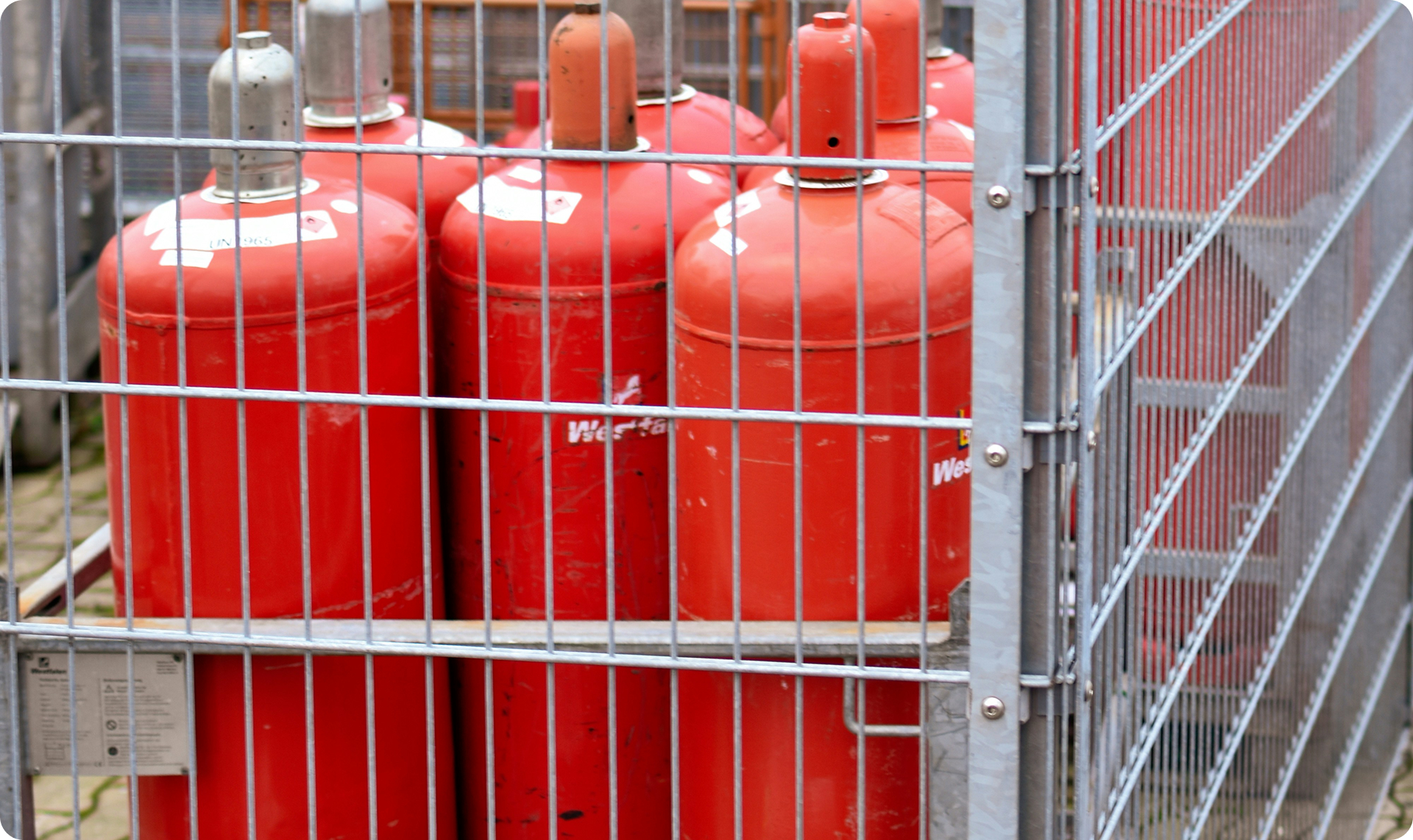
Compressed gas cylinders are the conventional starting point for laboratory-scale CVD diamond synthesis. They work for research applications, where volumes are small and interruptions are manageable. At production scale - facilities operating 20, 50, or 100 reactors continuously - cylinders introduce failure modes that are not engineering problems. They are logistics problems, and logistics problems do not have engineering solutions.
Cylinder supply requires regular deliveries, cylinder changes, and connection breaks. Each connection event introduces a potential contamination point. Cylinder-to-cylinder consistency at 7N purity is not guaranteed. And a missed delivery - for any of dozens of reasons outside the facility's control - triggers a production stoppage whose cost dwarfs the cost of the missed cylinder.
Bulk liquid hydrogen supply solves some of these problems and introduces others. Liquid hydrogen at the required purity grades is produced at central facilities and transported under controlled conditions, but the distribution chain between the production facility and the end user introduces handling risks. Vaporisation and storage at the receiving facility add further contamination exposure. And the fundamental dependency on external supply remains.
What on-site PEM electrolysis provides instead
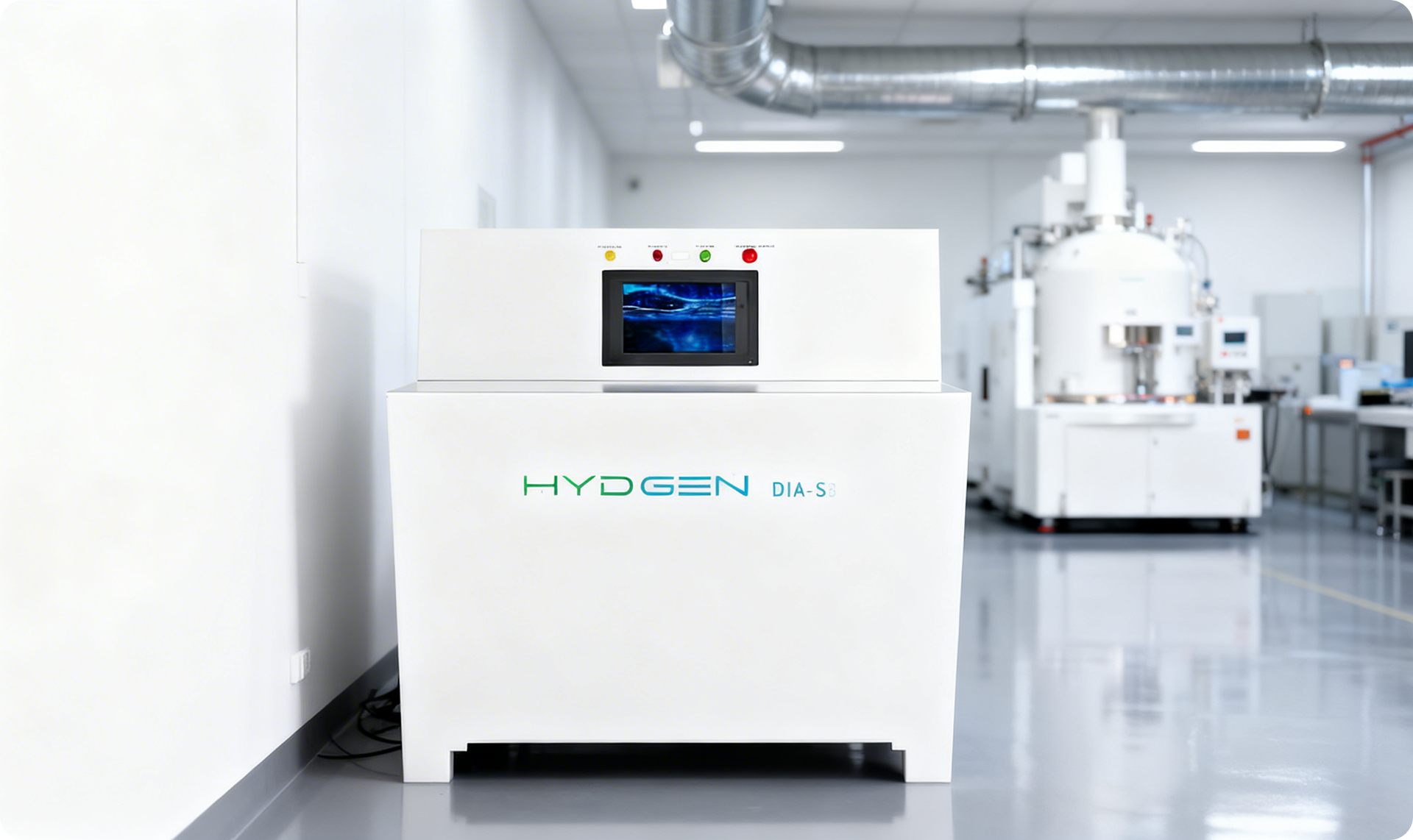
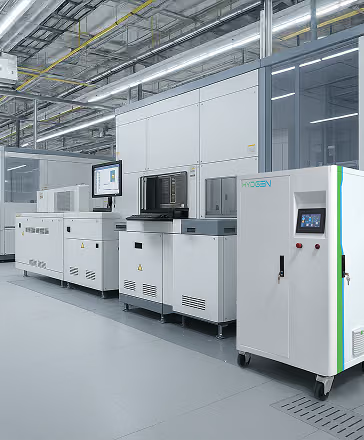
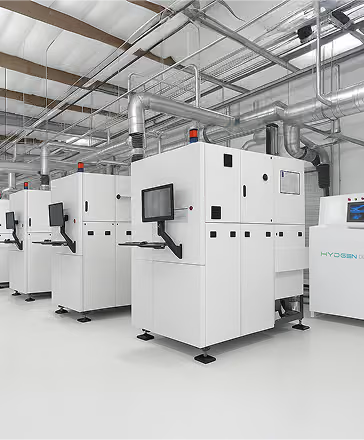
A PEM electrolyser produces hydrogen on-site, on-demand, from deionised water and electricity. The electrochemical separation process yields hydrogen with a baseline purity that, with appropriate downstream drying and purification (typically PSA or palladium membrane), consistently achieves 7N specification. The hydrogen is generated continuously, at the flow rates the process requires, at the facility where it is consumed.
There is no delivery logistics. There is no cylinder change. There is no connection event. There is no external supplier whose operational continuity is a factor in your production schedule. The hydrogen supply is an engineering system - designable, maintainable, and auditable - not a supply chain.
For a CVD diamond facility running at production scale, the all-in economics of on-site PEM electrolysis are competitive with delivered hydrogen at current pricing, and improve as facility scale increases. The capital cost of the electrolyser system is offset by the elimination of cylinder or bulk delivery costs, the reduction in production risk, and the removal of the restart cost exposure that defines the downside of supply interruption.
At nine systems and above - the scale at which full production facilities typically operate - modular on-site generation also provides redundancy architecture that cylinder supply cannot match: if one module requires maintenance, others continue to operate.
The lab-grown diamond market context
The lab-grown diamond market is growing rapidly and the competitive dynamics are intensifying. Facilities are scaling reactor counts, reducing cycle times, and pushing toward higher-clarity production as the market for industrial-grade and gem-quality CVD diamonds expands. In that competitive environment, production reliability is a cost of entry, not a differentiator.
The CVD diamond manufacturers who have moved to on-site PEM hydrogen generation are not primarily motivated by sustainability credentials - though the ability to document a clean hydrogen footprint is increasingly relevant to certain market segments. They are motivated by operational certainty, production consistency, and the removal of a supply chain dependency that is incompatible with continuous, quality-controlled manufacturing at scale.



Frequently Asked Questions


