


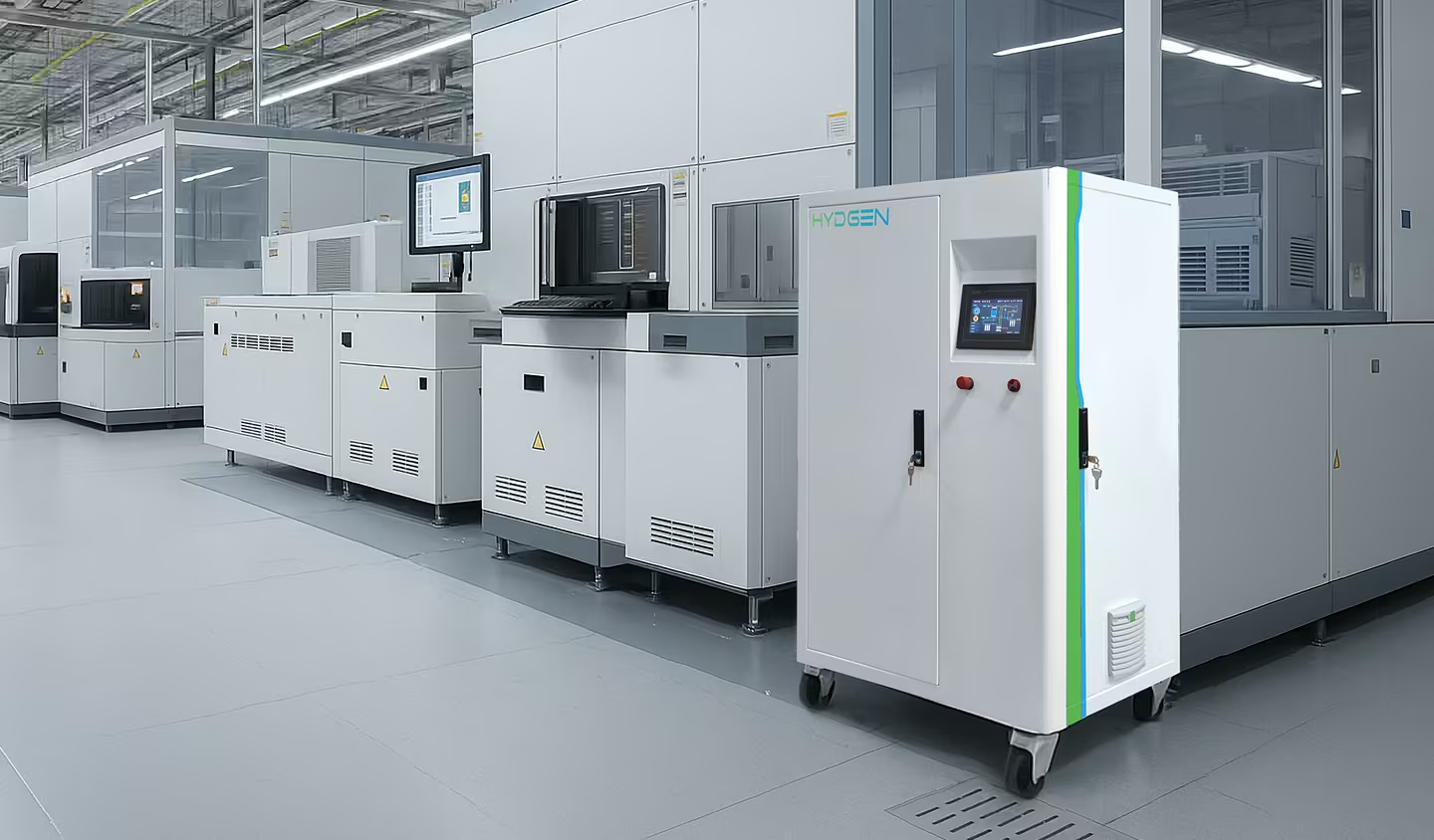
On-Site Hydrogen Generation for &Semiconductor Fabrication and Advanced Node Manufacturing&
Ultra-high purity hydrogen generation systems engineered for diffusion, annealing, epitaxial growth, EUV lithography, and the atmosphere control that advanced node manufacturing demands.
On-Site Hydrogen Generation for &Semiconductor Fabrication and Advanced Node Manufacturing&
Ultra-high purity hydrogen generation systems engineered for diffusion, annealing, epitaxial growth, EUV lithography, and the atmosphere control that advanced node manufacturing demands.
Semiconductor-Grade Hydrogen: Why Advanced Nodes Demand More From Your Hydrogen Supply
As process nodes shrink and thermal budgets tighten, the tolerance for trace impurities narrows. 99.9999% (6N) is the baseline expectation. Trace oxygen, moisture, and metallic contaminants alter oxide quality, affect carrier mobility, and introduce inter-lot variability that is costly to characterise and eliminate.
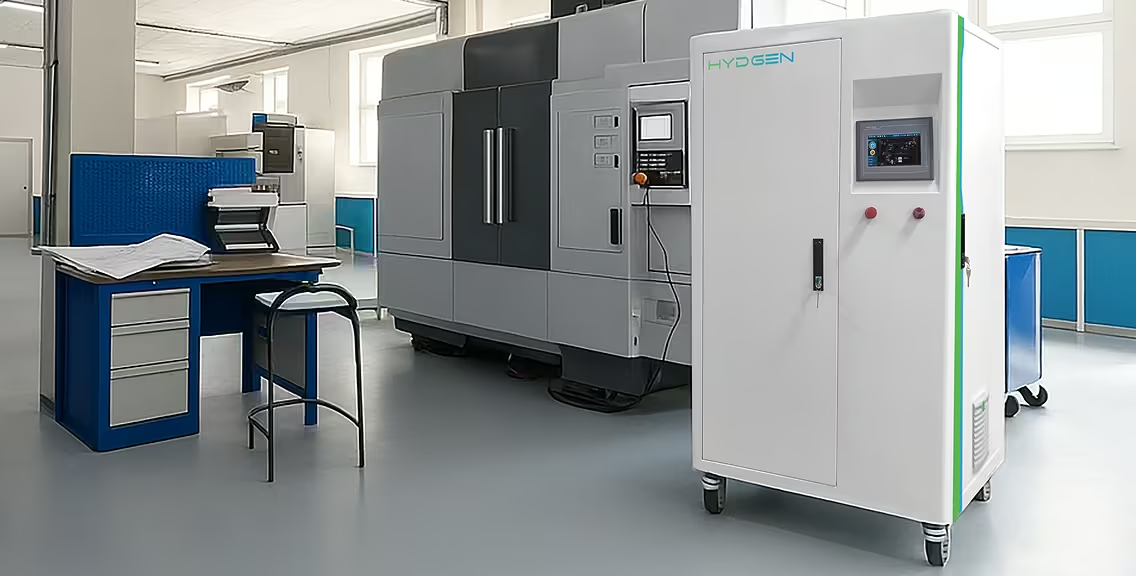
Continuous hydrogen at up to 99.99999% (7N) purity — meeting 6N minimum specifications across all operating conditions, not just at commissioning
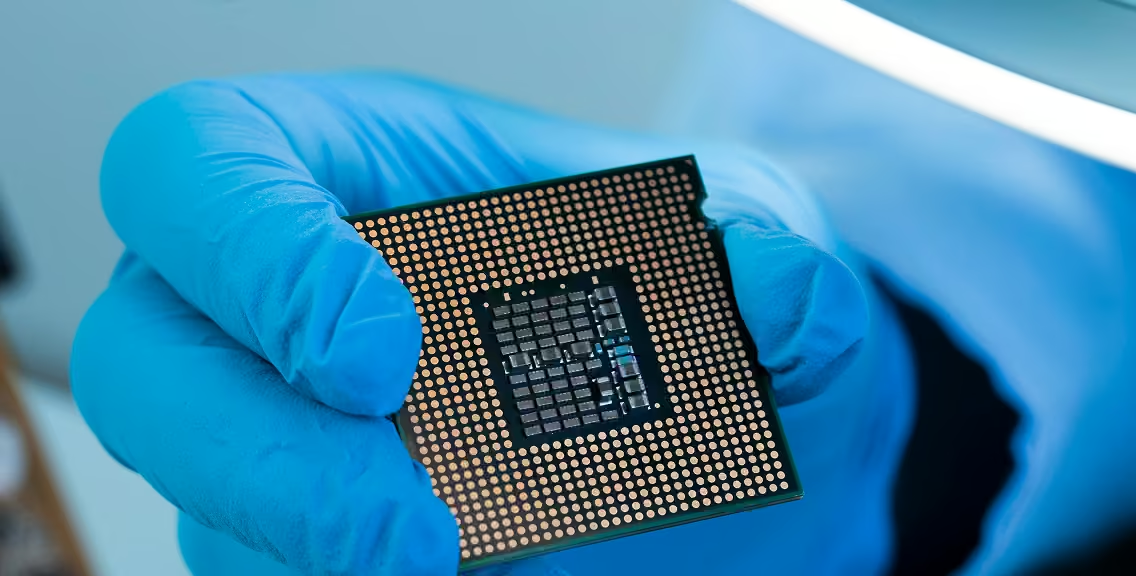
Trace O₂ (≤10 ppb), moisture (≤20 ppb), and metallic contaminants controlled below advanced node thresholds
Point-of-use purity verification with continuous monitoring data for process qualification and production records
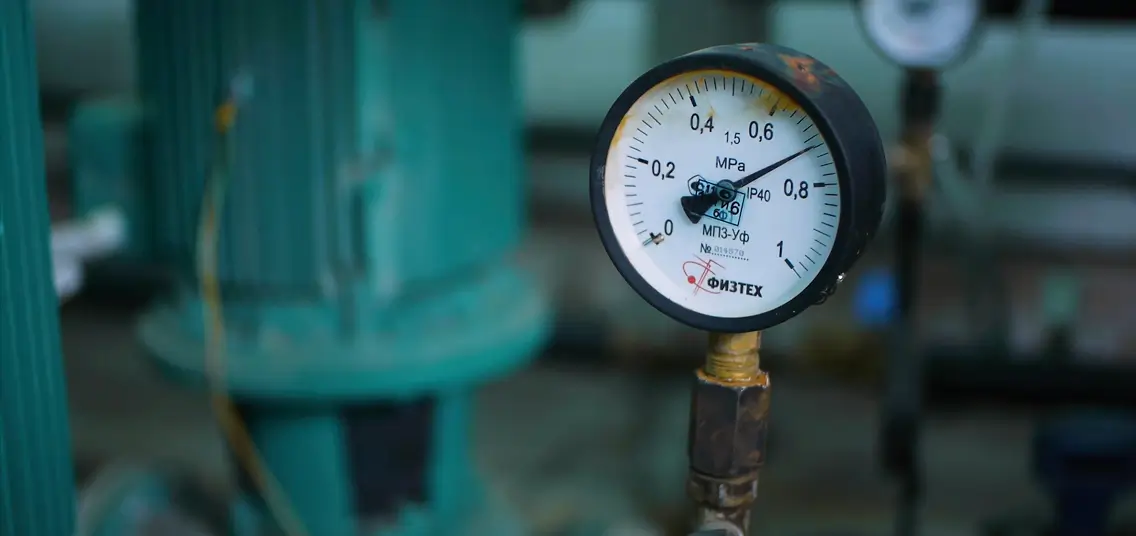
Stable pressure and flow matched to furnace, CVD reactor, and EUV tool specifications

>99.9%
on-site hydrogen purity

<30–50%>
reduction in inter-lot electrical variation

>99%
system uptime vs typical industrial gas supply interruptions
Our Impact
Assess On-Site Feasibility
60+
years cumulative hydrogen expertise
99.99999%
(7N) purity delivered on-site — verified at point of use

Reference deployment: Mudas Diamond, Surat — nine systems at 7N purity across production-scale operations

Manufactured in India — total cost of ownership advantage for fab expansion in India, APAC, and MENA
Where Incumbent Hydrogen Systems Create [Risk] in [Advanced Semiconductor Manufacturing]
Industrial gas supply contracts and legacy on-site generation both impose structural limitations that become more acute at advanced nodes.

Legacy systems
Purity ceilings that do not consistently achieve 6N–7N across all operating conditions and load profiles

Industrial gas contracts
service dependency, contract lock-in, and opaque per-wafer cost that limits operational flexibility and technology upgrades
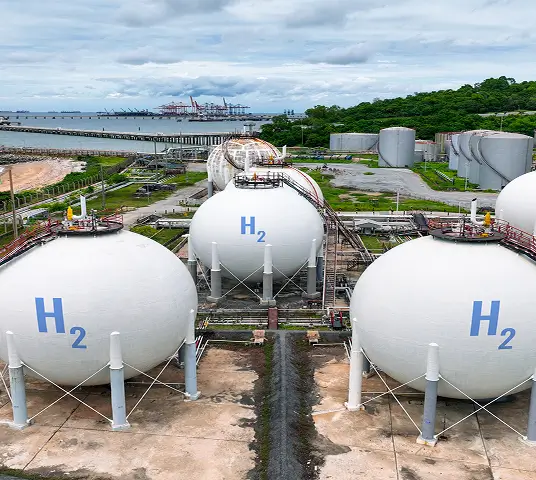
Centralised on-site configurations
single-point-of-failure risk where one unplanned outage interrupts supply to multiple process tools simultaneously
All arrangements
qualification and change-control complexity that creates a significant barrier to adopting newer, higher-performance generation technology
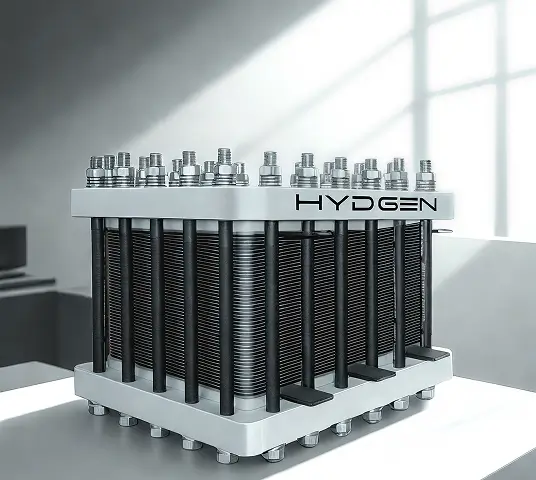
HYDGEN resolves the limitations of both models. Modular architecture eliminates single-point-of-failure risk. Performance specifications are set to advanced node requirements — 7N verified at point of use. The service model is designed for fab environments: local manufacturing in India, direct service, transparent total cost of ownership.
System-Level Reliability for {Advanced Node Semiconductor Manufacturing}
HYDGEN systems integrate with diffusion furnaces, annealing chambers, epitaxial reactors, CVD tools, and EUV support systems.

Advanced Node Purity Performance to 7N
Up to 99.99999% (7N) with point-of-use verification — meeting 6N minimum for diffusion, LPCVD annealing, Si/SiGe epitaxy, and EUV tin cleaning.

Redundant Architecture for Fab-Grade Uptime
Multi-module redundancy, automated failover, and real-time purity monitoring designed for continuous fab operations.

Tool-Proximate, Modular Deployment
Compact units within fab utility spaces adjacent to process tool clusters — minimising distribution line length and eliminating purity degradation

Scalable Capacity for Node Transitions and EUV Deployment
Expand in line with fab growth and EUV rollout — which more than doubles hydrogen consumption — without switching supply architectures.

Pilot Data & Performance Metrics
<8,000–8,400 hours/year>
System uptime
<18–25% lower>
5-year total cost of ownership vs incumbent supply
99.999%+
Gas purity across full operating range

Frequently Asked Questions
What hydrogen purity is required for semiconductor fabrication?

Semiconductor fabrication requires ≥99.9999% (6N) hydrogen as the minimum for critical process applications, with leading-edge applications specifying 99.99999% (7N). Critical impurities: O₂ ≤10 ppb, moisture ≤20 ppb, total hydrocarbons ≤100 ppb, and metallic contaminants at sub-ppb levels
Why is on-site hydrogen generation preferred for semiconductor fabs?
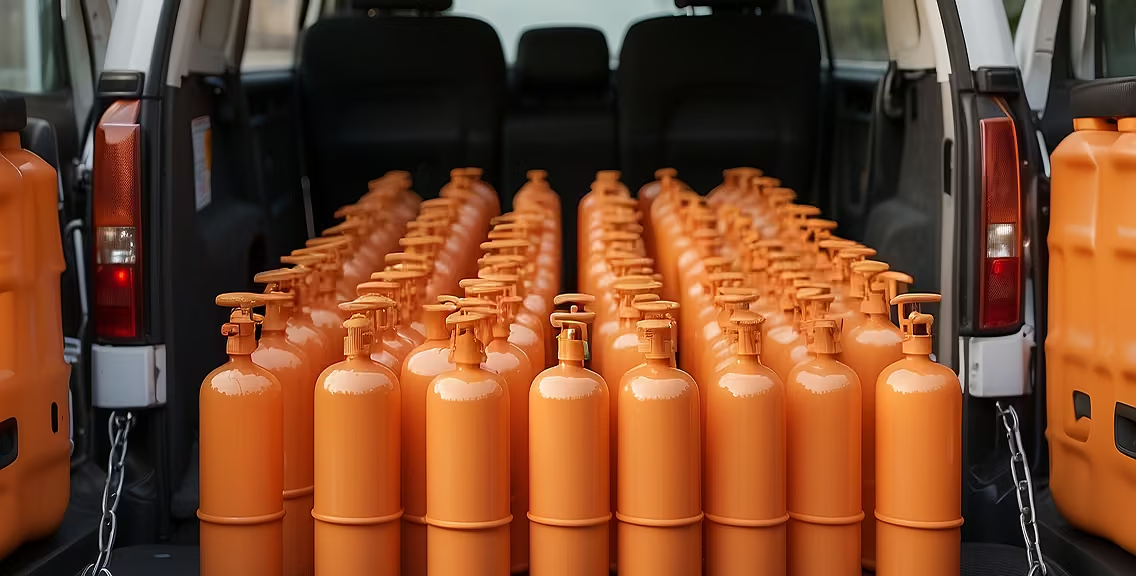
On-site generation eliminates contamination risks from tube trailer delivery and storage, provides continuous supply without logistics dependency, and enables module-level redundancy to eliminate single-point-of-failure risk. EUV deployment further strengthens the case — EUV tools require hydrogen close to the point of use
How does EUV lithography increase hydrogen demand in semiconductor fabs?
EUV uses a tin plasma to generate extreme ultraviolet radiation. Hydrogen plasma is used continuously to clean tin deposits from collector optics by forming tin hydride, which is evacuated. This consumption is directly proportional to EUV uptime and can more than double a fab's total hydrogen demand.
What is the risk of using industrial gas supply contracts for semiconductor hydrogen?
Industrial gas contracts bundle hydrogen supply with on-site generation equipment and maintenance — creating service dependency, limiting technology flexibility, obscuring true cost per wafer, and making upgrades commercially difficult. For fabs in India and APAC, European-origin contracts carry additional currency risk and service response time limitations.
Can HYDGEN achieve the purity specifications required by India's new semiconductor fabs?
Yes. HYDGEN systems deliver up to 99.99999% (7N) purity, exceeding the 6N minimum for advanced semiconductor manufacturing. For India's emerging fab sector, HYDGEN offers a domestically manufactured alternative to international gas contracts, with local service and transparent total cost of ownership.
Own your hydrogen supply
Tired of paying 60% more for your hydrogen than you need to?
Take control with on-site, on-demand production that's cost-effective, ultra-pure, and built for your reality.
Take control with on-site, on-demand production that's cost-effective, ultra-pure, and built for your reality.
Own your hydrogen supply
Ready to stop spending 60% more for your hydrogen than you need to? Reduce operational costs and eliminate dependency on external suppliers with your own on-site, on-demand hydrogen production.


