


Decentralised Hydrogen Production: Why Industrial Manufacturers Aren't Waiting for the Infrastructure
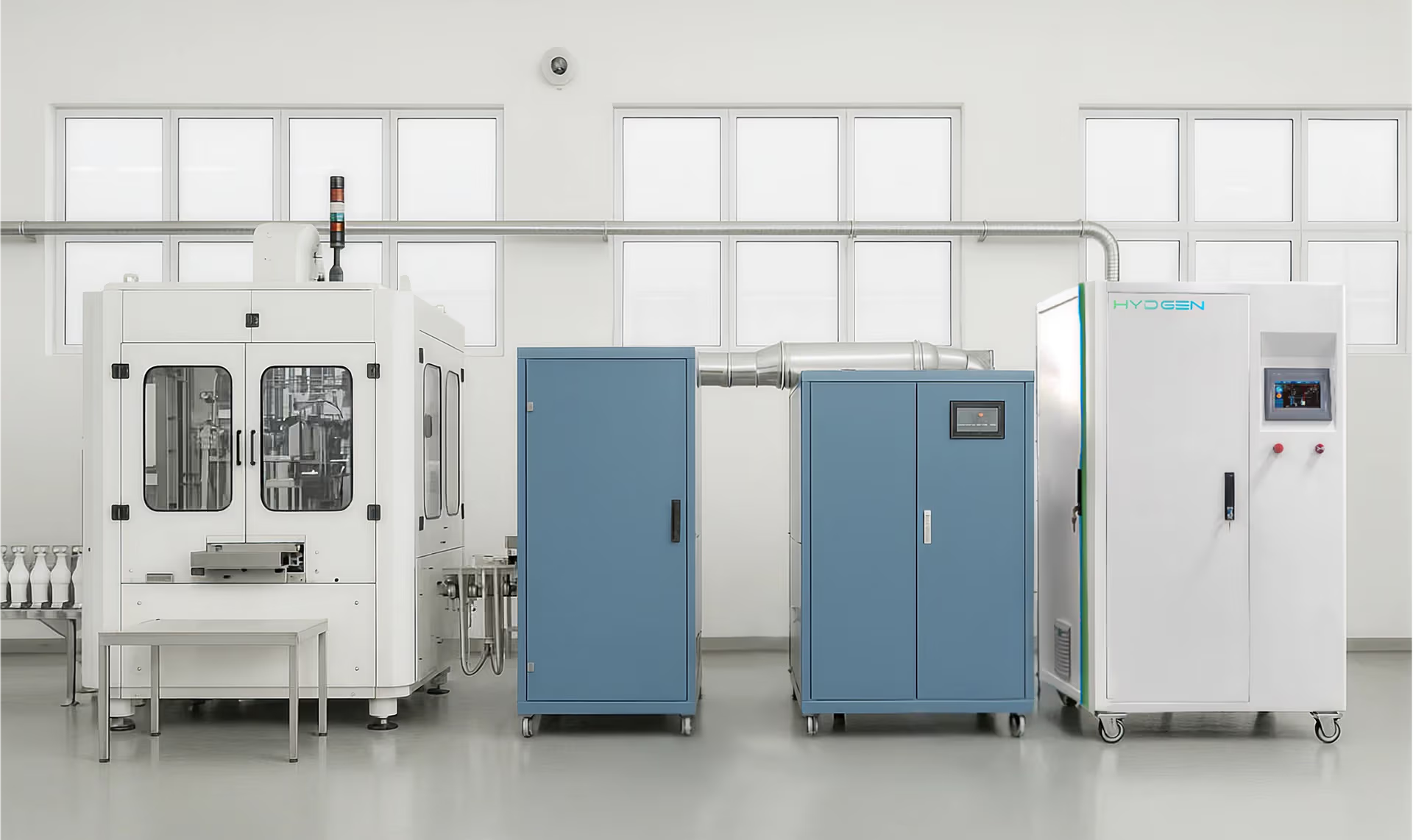
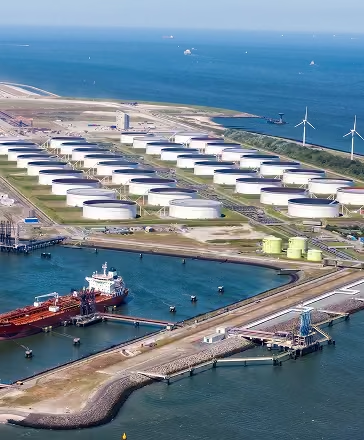
Two distinct hydrogen economies are forming in parallel. One is being built - pipelines, import terminals, national stockpiles. The other is already running, in factories and clean rooms where on-site generation has already won the procurement argument.
The hydrogen economy, as it is usually described, is a story about infrastructure: electrolyser gigafactories, intercontinental shipping corridors, pipeline networks, national production targets. It is a compelling story about where hydrogen could eventually sit in the global energy system — and for certain applications, the investments being made today will matter enormously.
It is also not the whole picture. Alongside the infrastructure build-out, a second hydrogen economy is already operating. It is quieter. It does not announce gigawatt targets. It is built on modular, on-site hydrogen generation — and it is following a completely different commercial logic.
Understanding the distinction between these two economies is the most important analytical frame for any industrial company making hydrogen decisions today.
What decentralised hydrogen production means - and why it matters
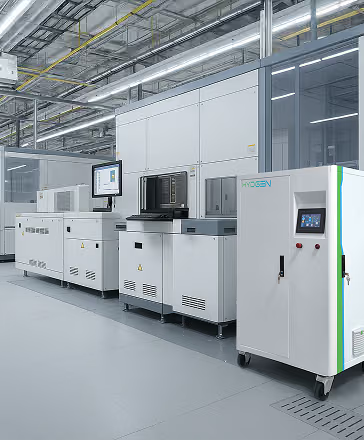
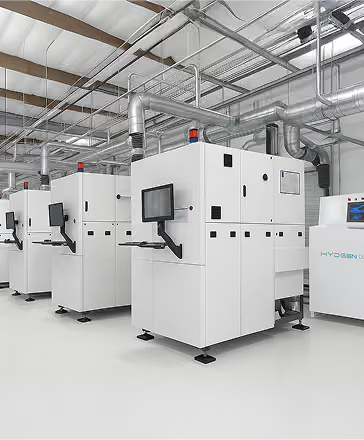
Decentralised hydrogen production refers to the model in which hydrogen is produced at or near the point of use, typically by an electrolyser system operating on-site at an industrial facility. It is the alternative to centralised production — large facilities producing hydrogen at scale and distributing it through supply chains.
The distinction is not primarily about scale, though scale is a factor. It is about operational architecture and the risk profile that comes with it. Centralised supply chains introduce logistics dependencies, storage requirements, and third-party reliability assumptions. Decentralised on-site generation eliminates these dependencies by design: the hydrogen is produced where it is consumed, at the rate it is required, under the operational control of the facility that uses it.
For a subset of industrial users — those for whom hydrogen is a process-critical input rather than a commodity feedstock — this operational architecture is not merely preferable. It is the only architecture that meets their requirements.

The industrial users driving decentralised adoption today
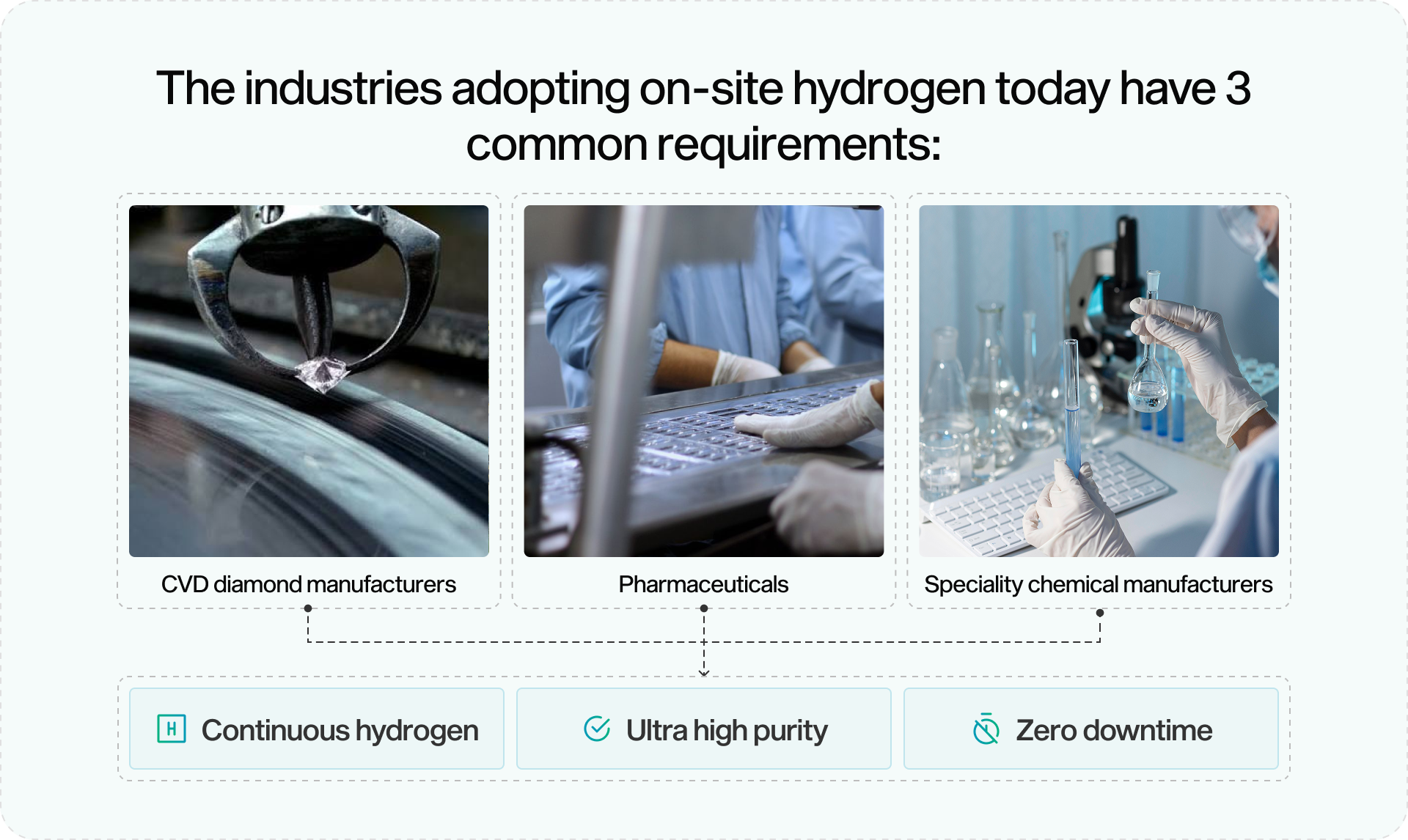
Three categories of industrial users (although there are many more) are driving current commercial deployment of on-site hydrogen generation, and they share a common characteristic: hydrogen supply interruption is not a cost event for them. It is an operational failure.
CVD diamond manufacturers — particularly in India's rapidly expanding lab-grown diamond sector — require continuous hydrogen at 7N purity (99.99999%) across dozens of reactors operating simultaneously. The restart cost of a supply interruption is measured in weeks and hundreds of thousands of dollars. Supply chain delivery cannot provide the continuity these facilities require.
Semiconductor fabrication facilities require hydrogen at 6N to 7N purity for diffusion, annealing, and epitaxial growth processes. At advanced nodes, trace contamination introduces inter-lot variability that is costly to characterise and impossible to reverse. Process gas supply is a quality system, not a procurement system.
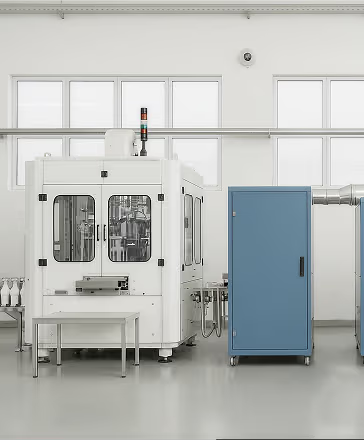
Specialty chemical manufacturers across petrochemicals, fine chemicals, and pharmaceutical intermediates use hydrogen as a feedstock in hydrogenation and other synthesis processes. For continuous operations, the reliability and consistency of hydrogen supply is a production planning constraint.
Why the economics favour decentralisation in India and APAC
The case for decentralised hydrogen production is particularly strong in markets where centralised hydrogen infrastructure is nascent — which describes most of India and a substantial portion of APAC.
In mature industrial economies, companies evaluating on-site generation face a build-versus-buy decision against an existing supply chain: delivered hydrogen is available, priced, and logistically established. In markets where that infrastructure is still being developed, the comparison is different. The alternative to on-site generation is often not a competitive supply chain — it is a less reliable one, with longer lead times, higher purity variability, and greater disruption exposure.
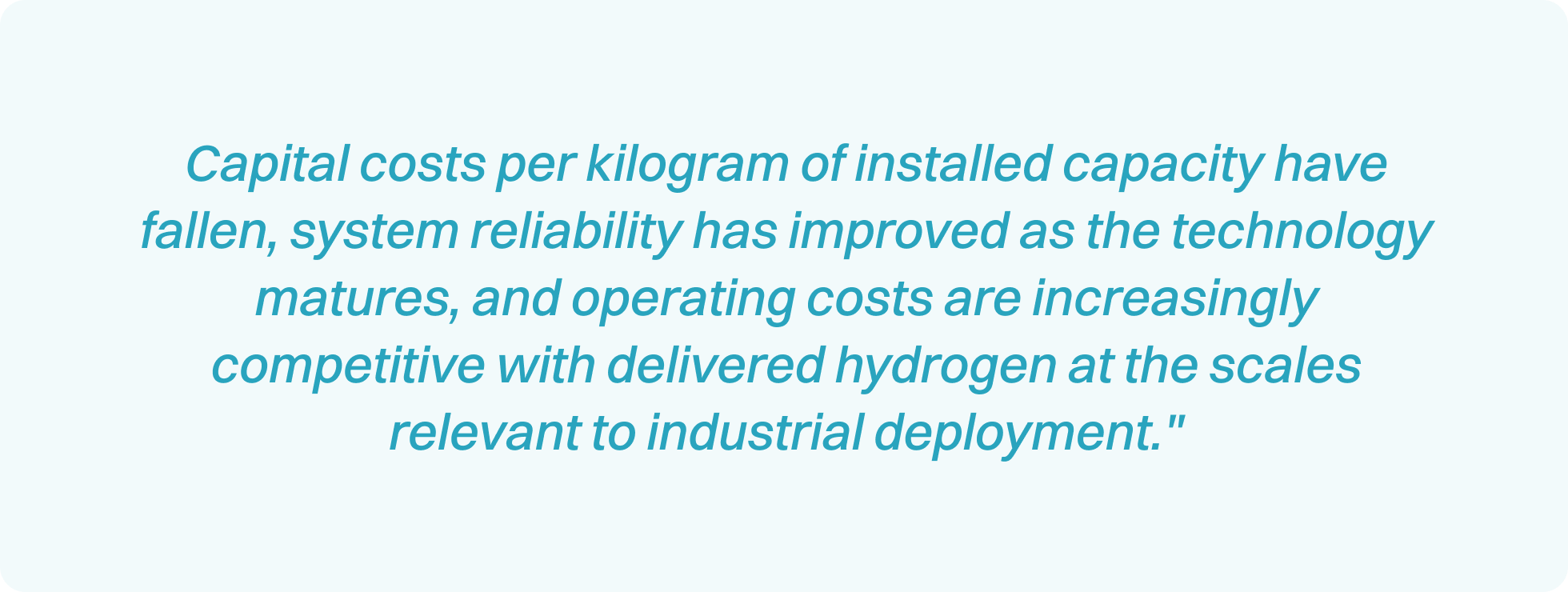
Electrolyser economics have moved substantially in favour of on-site generation over the past five years. Capital costs per kilogram of installed capacity have fallen, system reliability has improved as the technology matures, and operating costs are increasingly competitive with delivered hydrogen at the scales relevant to industrial deployment. The breakeven point at which on-site generation is cost-competitive continues to move toward smaller systems and lower utilisation rates.
For Indian industrial manufacturers in particular, an additional factor applies: domestically manufactured electrolyser systems — produced in India, serviced in India — carry a total cost of ownership advantage relative to imported alternatives that is not always visible in capital cost comparisons alone.
What this means for EPCs, procurement teams, and policymakers
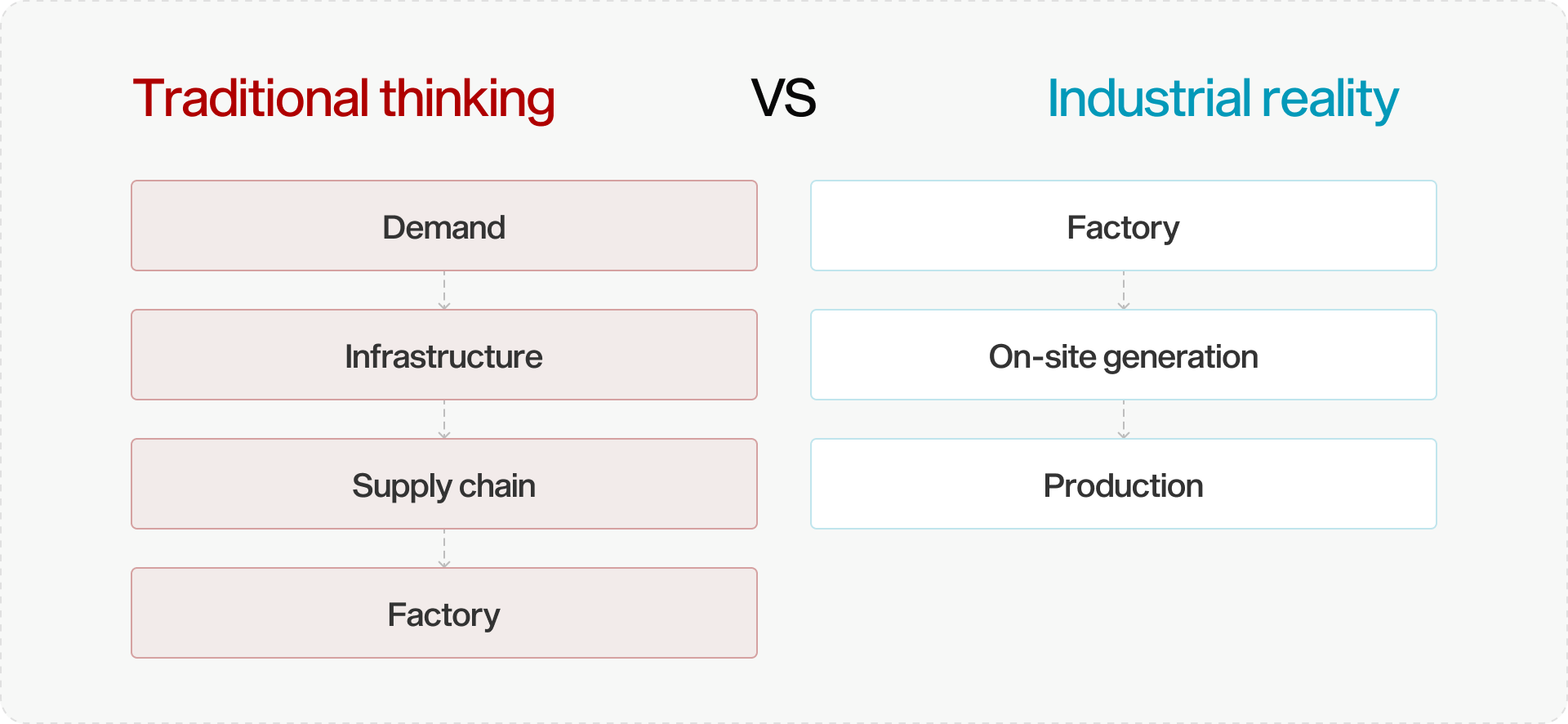
The conventional hydrogen policy and project development framework — identify demand, build supply infrastructure, connect them — implicitly assumes that centralised supply is the end state for all industrial hydrogen users. This assumption is incorrect for a significant and commercially active segment of the market.
EPCs scoping hydrogen supply for industrial clients should be evaluating on-site generation as the primary architecture for process-critical applications, not as a fallback when centralised supply is unavailable. For facilities with high purity requirements, continuous operation mandates, or significant restart cost exposure, on-site generation is not a compromise. It is the correct engineering answer.
Policymakers designing hydrogen incentive frameworks should consider whether their support mechanisms adequately address the decentralised segment. Incentives structured around large-scale production projects and supply chain infrastructure are not equally accessible to the industrial manufacturers for whom on-site generation is already the commercial reality. Captive generation — hydrogen produced by and for a single industrial user — represents the largest revenue share of the current hydrogen generation market globally, yet it receives a fraction of the policy attention.





Frequently Asked Questions


